Dietrich Bonhoeffer
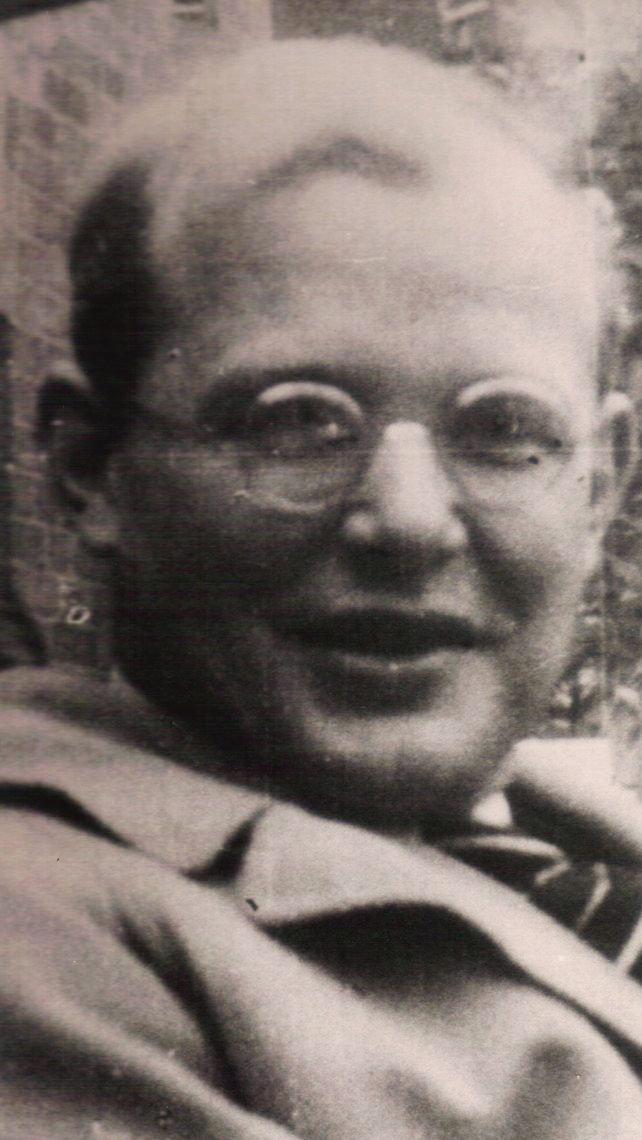
Pastor, Theologian, and Christian Witness
1906–1945
Estimated reading time: 4 minutes
Dietrich Bonhoeffer was a German Lutheran pastor, theologian, teacher, and opponent of National Socialism. His writings on discipleship, Christian community, ethics, and the church’s responsibility in the world have made him one of the most widely read Christian thinkers of the twentieth century.
Bonhoeffer was born on February 4, 1906, in Breslau, then part of Germany and now Wrocław, Poland. He grew up in a highly educated family. His father, Karl Bonhoeffer, was a prominent psychiatrist and neurologist, while his mother, Paula, supervised much of her children’s early education and came from a family with strong theological connections. Although Bonhoeffer’s family was not conventionally religious, he decided at a young age to study theology.
He attended the universities of Tübingen and Berlin and completed his doctorate at the age of twenty-one. His dissertation, later published as Sanctorum Communio, examined the church as a community formed through Christ. A second academic work, Act and Being, explored revelation, human knowledge, and the nature of Christian existence.
In 1930 Bonhoeffer traveled to the United States for further study at Union Theological Seminary in New York. He was disappointed by aspects of American academic theology but was deeply influenced by his involvement with Abyssinian Baptist Church in Harlem. There he encountered African American preaching, spirituals, community life, and the realities of racial injustice. This experience strengthened his conviction that Christian faith must involve concrete obedience and solidarity with those who suffer.
After Adolf Hitler came to power in 1933, Bonhoeffer quickly opposed Nazi attempts to control the German churches. He rejected the effort to exclude Christians of Jewish ancestry from church ministry and argued that the church had responsibilities not only toward its own members but also toward victims of state injustice. He became associated with the Confessing Church, which resisted the Nazification of German Protestantism. From 1935 to 1937 he directed an underground seminary at Finkenwalde, where students shared a disciplined life of prayer, Scripture, worship, study, and service. These experiences shaped his book Life Together. (Holocaust Encyclopedia)
Bonhoeffer’s best-known work, Discipleship, contrasts “cheap grace” with costly grace. Cheap grace offers forgiveness without repentance, baptism without discipline, and Christianity without obedience. Costly grace calls the believer to follow Jesus Christ, surrender self-interest, and accept the consequences of faithful discipleship. His other important works include Creation and Fall, Ethics, and Letters and Papers from Prison. The latter, assembled after his death by his friend Eberhard Bethge, contains Bonhoeffer’s reflections on Christ, the modern world, suffering, and what he called a “religionless Christianity.” (Bonhoeffer Society)
Bonhoeffer eventually became connected with German resistance circles through the military intelligence organization known as the Abwehr. His precise role in resistance activities remains a subject of historical discussion, but he used his ecumenical contacts abroad to convey information about opposition to Hitler. The Gestapo arrested him in April 1943. After documents linking members of his circle to the resistance were discovered, Bonhoeffer was transferred through several prisons and concentration camps. He was executed by hanging at Flossenbürg concentration camp on April 9, 1945, only weeks before the end of the war in Europe. (Holocaust Encyclopedia)
As a conversation partner, Bonhoeffer reminds readers that theology cannot be separated from discipleship. Christian doctrines must be centered in Jesus Christ and embodied through obedience, service, truthfulness, and responsibility for one’s neighbor. His resistance to racial ideology and political idolatry makes his voice especially important when Christians consider the church’s relationship to power and its responsibility toward persecuted people.
Bonhoeffer should not be romanticized or recruited too easily for contemporary political causes. His developing ideas must be interpreted carefully within their historical and theological contexts. Nevertheless, his life confronts the church with an enduring question: What does faithful obedience to Jesus Christ require when silence and safety come at the expense of one’s neighbor?
“Be doers of the word, and not hearers only, deceiving yourselves.”
—James 1:22